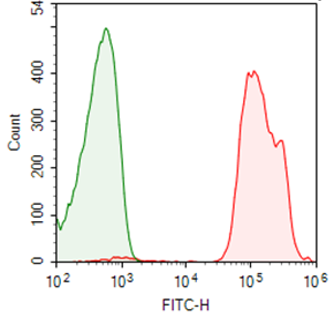
| Cat # | Size | Price | Quantity | |
|---|---|---|---|---|
| 102803 | 25 tests | $80 | ||
| 102804 | 100 tests | $170 |
| Clone | W6/32 |
|---|---|
| Application | Flow Cytometry |
| Reactivity | Human |
| Format | iF488 |
| Target Name | HLA-ABC, Major Histocompatibility Class I, MHC class I |
| Isotype | Mouse IgG2a |
| Antibody Type | Monoclonal |
| Regulatory Status | RUO |
| Formulation | Phosphate-buffered solution, pH 7.2, containing 0.09% sodium azide and 0.2% (w/v) BSA |
| Protein Concentration | Supplied at a lot-specific concentration. |
| Storage and Handling | The antibody solution should be stored undiluted between 2°C and 8°C, and protected from prolonged exposure to light. Do not freeze. |
| Recommended Usage | For flow cytometric staining, it is recommended to use 5 µL of this reagent per 0.5-1.0 million cells in a 100 µL volume. Optimal reagent performance should be determined by titration for each specific application. iF488 has an excitation max at 491 nm and an emission max at 516 nm. |
| Excitation Laser | Blue Laser (488 nm) |
| Research Areas | Antigen presentation, Autoimmunity, Cancer Immunology |
| See All Formats | Clone W6/32 |
HLA-ABC refers collectively to the classical human leukocyte antigen (HLA) class I molecules HLA-A, HLA-B, and HLA-C, which are essential for immune surveillance by cytotoxic lymphocytes. These molecules are expressed on nearly all nucleated cells and function to present intracellularly derived peptide antigens to CD8⁺ T cells, enabling the immune system to detect and eliminate virally infected or malignant cells.
Structurally, each HLA-A, -B, or -C molecule is a heterodimer composed of a polymorphic heavy α chain (~45 kDa) noncovalently associated with the invariant β2-microglobulin (β2m). The α chain consists of three extracellular domains (α1, α2, and α3), a transmembrane region, and a short cytoplasmic tail. The α1 and α2 domains form a closed-ended peptide-binding groove that typically accommodates peptides 8-11 amino acids in length. Extensive polymorphism within these domains underlies differences in peptide-binding specificity among HLA alleles, shaping individual immune responses.
The ligands of HLA-ABC are peptides generated from endogenous proteins, including normal self proteins, viral antigens, and tumor-associated antigens. These peptides are produced by proteasomal degradation in the cytosol and transported into the endoplasmic reticulum by the transporter associated with antigen processing (TAP), where they are loaded onto HLA class I molecules. Once expressed on the cell surface, peptide-HLA-ABC complexes are recognized by the T cell receptor (TCR) on CD8⁺ T cells. In addition, HLA-ABC molecules interact with inhibitory and activating receptors on natural killer (NK) cells, such as killer cell immunoglobulin-like receptors (KIRs), allowing NK cells to sense “missing self” when HLA class I expression is reduced.
HLA-ABC molecules are strongly implicated in disease. Specific HLA-A, -B, and -C alleles are associated with susceptibility or resistance to infectious diseases, cancer outcomes, and autoimmune conditions such as ankylosing spondylitis (HLA-B27) and psoriasis (HLA-C*06:02). Many tumors downregulate HLA-ABC expression to evade CD8⁺ T cell recognition, contributing to immune escape. Conversely, loss of HLA class I can enhance susceptibility to NK cell-mediated killing.
Therapeutically, HLA-ABC is central to cancer immunotherapy, antiviral immunity, and transplantation. Effective CD8⁺ T cell-based therapies, including cancer vaccines, checkpoint inhibitors, and adoptive T cell therapies, rely on intact HLA class I antigen presentation. In transplantation, HLA-ABC matching is critical to reduce graft rejection. Additionally, modulation or restoration of HLA-ABC expression is an active area of research aimed at overcoming tumor immune evasion and improving immunotherapeutic outcomes.
iF488 Mouse IgG2a Isotype Control Antibody
iF488 Anti-Human HLA-ABC Antibody TDS
FITC Anti-Human HLA-ABC Antibody, Clone W6/32-RB
Anti-Human HLA-DR Antibody, Clone L243
iF488 Anti-Human HLA-DR Antibody, Clone L243
In Vivo Star Anti-Human HLA-DR/DP/DQ Antibody, Clone F3.3
In Vivo Star Anti-Human HLA class II DR/DQ Antibody, Clone 9.3F10
In Vivo Star Anti-Human HLA Class I Heavy Chain Antibody, Clone HC10
In Vivo Star Anti-Human HLA-ABC Antibody, Clone W6/32
Have a product or application question? Consult our FAQs or contact us.