Glucagon-like peptide-1 (GLP-1) is one of the most consequential signaling molecules to emerge from metabolic research in the past three decades. Secreted by intestinal L-cells in response to nutrient intake, GLP-1 is an incretin hormone, a class of gut-derived peptides that potentiate glucose-stimulated insulin secretion. Upon binding its receptor (GLP-1R), a class B G- protein-coupled receptor expressed on pancreatic beta cells, hypothalamic neurons, cardiac tissue, and the gastric mucosa, GLP-1 triggers a cascade of downstream effects: enhanced insulin release, suppressed glucagon secretion, delayed gastric emptying, and reduced appetite via central nervous system signaling.
This pleiotropic mechanism made GLP-1 an obvious therapeutic target for type 2 diabetes and, more recently, obesity. The problem was pharmacokinetic: native GLP-1 has a circulating half-life of under two minutes, rapidly degraded by the enzyme dipeptidyl peptidase-4 (DPP-4) and cleared renally. A drug that mimics GLP-1 but survives systemic circulation long enough to be clinically useful requires deliberate molecular re-engineering, which is precisely what semaglutide represents.
Semaglutide is a 31-amino acid peptide, structurally derived from human GLP-1 but modified at three critical positions to overcome the stability limitations of the native hormone. Understanding these modifications is a case study in structure- based peptide drug design.
Native GLP-1 contains an alanine at position 8, which is the primary cleavage site recognized by DPP-4. Interestingly, nature had already solved this problem once before: exendin-4, a GLP-1-receptor-agonist peptide isolated from the saliva of the Gila monster (Heloderma suspectum), is naturally DPP-4 resistant due to a glycine substitution at the analogous position, a discovery that helped validate the entire incretin-mimetic drug class and directly inspired exenatide, the first GLP-1 agonist approved for clinical use. Semaglutide takes a related but distinct engineering approach, substituting the alanine with alpha- aminoisobutyric acid (Aib), a non-proteinogenic amino acid with a quaternary carbon that sterically blocks DPP-4 recognition. This single substitution dramatically extends resistance to enzymatic degradation without altering receptor-binding geometry.
The defining engineering feature of semaglutide is a C18 diacid fatty chain conjugated via a gamma-glutamic acid and two mini-PEG (AEEA) spacers to a lysine residue at position 26. This lipid moiety non-covalently binds serum albumin with high affinity. Because albumin is too large for renal filtration and has an intrinsic circulating half-life of roughly three weeks, the conjugated peptide is effectively "chaperoned" through the bloodstream, shielded from proteolytic enzymes and glomerular clearance. This is the same acylation strategy pioneered in liraglutide (C16 fatty diacid), but semaglutide's longer C18 chain and optimized spacer chemistry further increase albumin affinity, extending the elimination half-life to approximately one week, enabling once-weekly subcutaneous dosing.
To enable site-specific conjugation of the fatty acid chain without competing acylation at other lysine residues, the native lysine at position 34 is replaced with arginine. This ensures the fatty diacid is attached exclusively at the intended position 26 site during synthesis, preserving batch consistency and receptor activity.
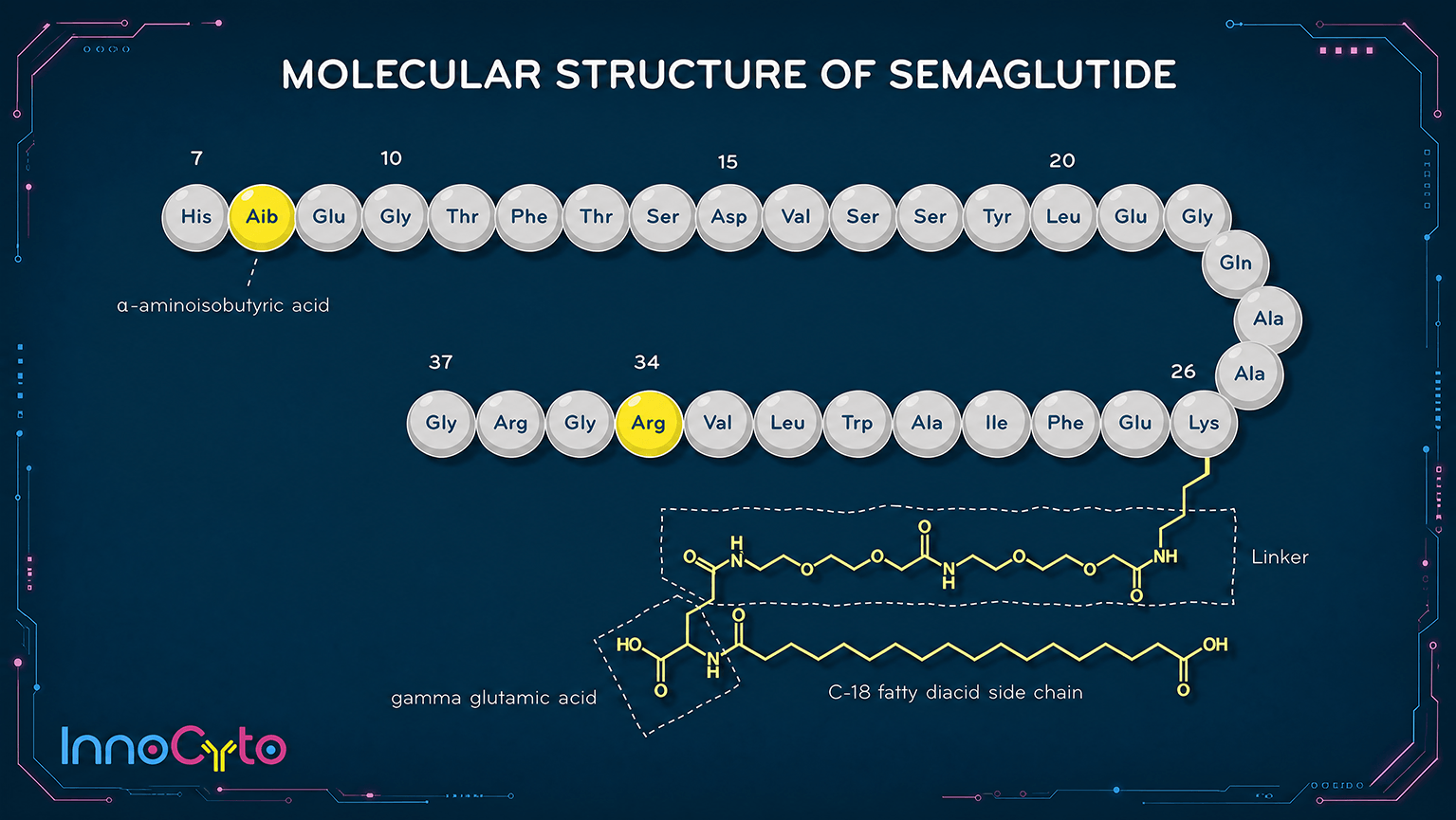
Semaglutide is manufactured via a hybrid approach combining solid-phase peptide synthesis (SPPS) for the core amino acid backbone with solution-phase conjugation chemistry for attachment of the fatty diacid side chain. This is analogous in complexity to bioconjugation workflows used in antibody-drug conjugate (ADC) development, a site-specific chemical modification is layered onto a biologically active scaffold to confer pharmacokinetic properties the native molecule lacks. For those of us working in antibody engineering, the underlying logic is familiar: extend half-life and control biodistribution through rational conjugation chemistry, while preserving the pharmacophore responsible for target engagement.
Despite these extensive modifications, semaglutide retains approximately 94% sequence homology with native human GLP-1 and binds GLP-1R with comparable affinity. Receptor activation stimulates adenylate cyclase, raising intracellular cAMP and activating protein kinase A (PKA) and Epac2 signaling in pancreatic beta cells — the canonical route to glucose-dependent insulin secretion. Because this insulinotropic effect is glucose-dependent, semaglutide carries a comparatively low intrinsic risk of hypoglycemia relative to insulin secretagogues that act independently of blood glucose levels.
Beyond glycemic control, GLP-1R signaling in the hypothalamic arcuate nucleus and area postrema modulates satiety circuits, which, combined with delayed gastric emptying, accounts for the substantial weight reduction observed in clinical use. This dual mechanism has driven semaglutide's expansion beyond diabetes management into dedicated obesity indications.
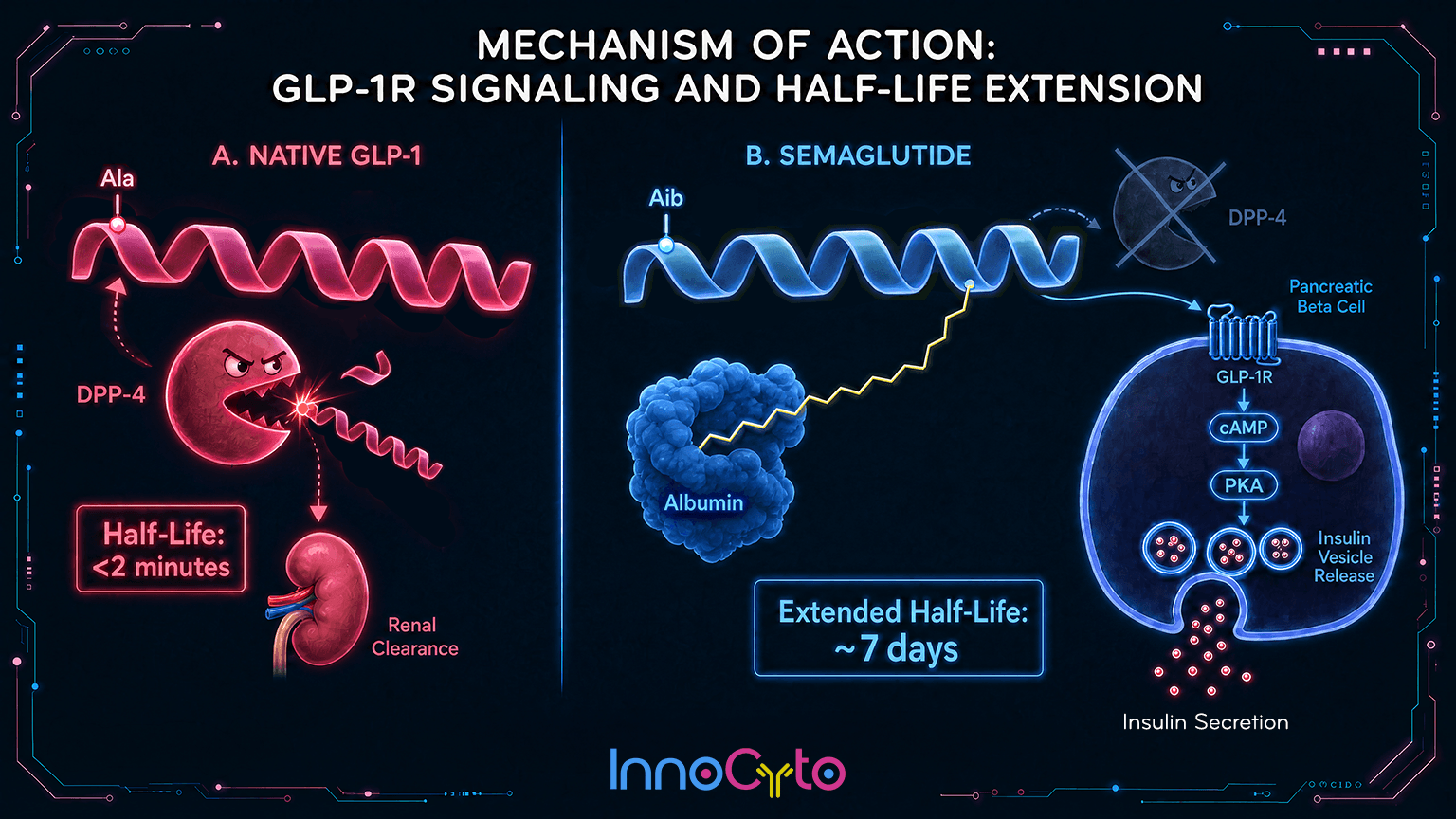
Semaglutide's design exemplifies a broader principle relevant to biologics development generally: therapeutic efficacy is rarely limited by target engagement alone. Half-life extension, protease resistance, and controlled conjugation chemistry are frequently the rate-limiting engineering challenges, whether the scaffold is a 31-residue peptide or a full-length monoclonal antibody. The albumin-binding fatty acid strategy used here parallels Fc-mediated recycling via FcRn in antibody biology, and the site-specific conjugation constraint echoes the same regiochemical precision demanded in ADC linker-payload design.
Contact us for expert support.