For nearly a decade, PD-1, PD-L1, and CTLA-4 have anchored the checkpoint inhibitor field, and HER2, EGFR, and CD20 have defined targeted antibody therapy. But the tumor antigen landscape is expanding rapidly, driven by antibody-drug conjugate (ADC) development, single-cell profiling of the tumor microenvironment, and a deeper understanding of resistance to first- generation immunotherapies. Researchers are now converging on a new cohort of markers that combine high tumor selectivity with low expression in healthy tissue, the exact profile needed for both diagnostic assays and next-generation therapeutic conjugates.
This note surveys three of the most clinically and commercially significant emerging targets: Claudin 18.2 (CLDN18.2), Trophoblast cell-surface antigen 2 (Trop-2/TACSTD2), and B7-H3 (CD276). Each represents a distinct biological rationale, a distinct assay challenge, and a distinct opportunity for antibody reagent development.
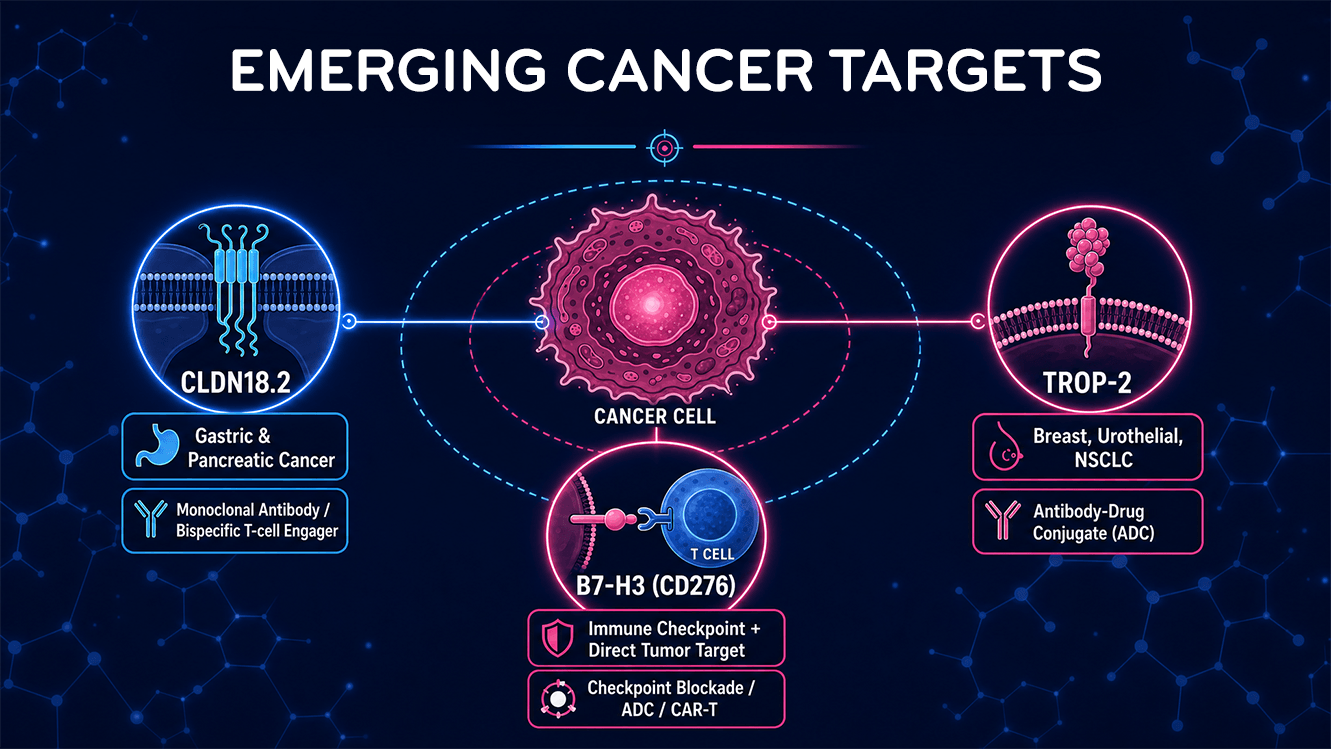
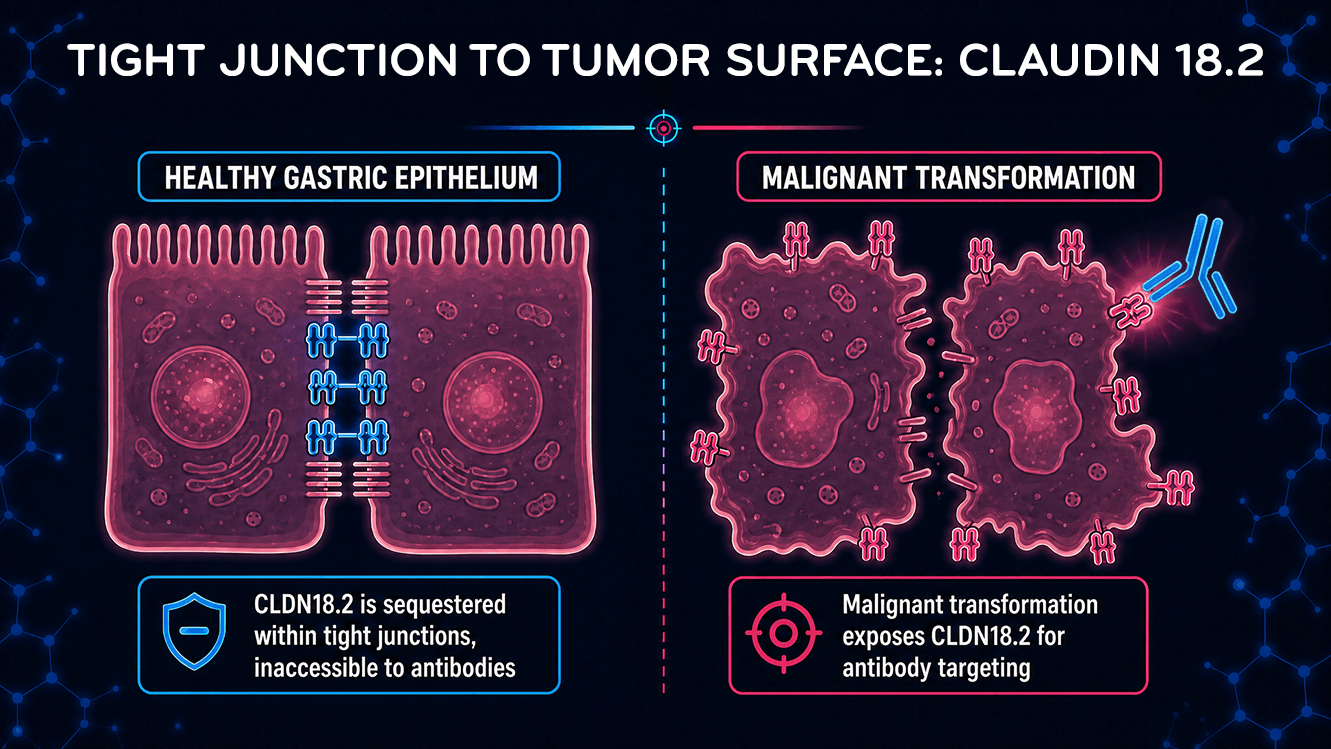
CLDN18.2 is a splice variant of Claudin 18, normally sequestered within tight junctions of differentiated gastric mucosal cells, largely inaccessible to circulating antibodies under healthy conditions. Malignant transformation disrupts cell polarity, exposing CLDN18.2 epitopes on the tumor cell surface. This creates a rare combination: broad expression across gastric, gastroesophageal junction, and pancreatic adenocarcinomas, paired with minimal accessibility in normal tissue.
The approval of zolbetuximab (an anti-CLDN18.2 monoclonal antibody) for CLDN18.2-positive, HER2-negative gastric cancers has validated the target clinically and triggered a wave of second-generation efforts, including CLDN18.2-directed ADCs and bispecific T-cell engagers. For researchers, the key technical hurdle is antibody specificity since CLDN18.2 differs from CLDN18.1 by only a few extracellular residues, making high-affinity, isoform-selective clones essential for both IHC-based patient stratification and functional assays.
Trop-2 is a transmembrane glycoprotein overexpressed across triple-negative breast cancer, urothelial carcinoma, and non-small cell lung cancer, where it drives proliferation and invasion through calcium-signaling and MAPK pathway activation. Unlike lineage- restricted markers, Trop-2's broad tumor distribution has made it a favored payload-delivery target rather than a checkpoint or signaling blockade target, most notably validated by the ADC sacituzumab govitecan.
What makes Trop-2 an active area of reagent development is expression heterogeneity: tumor-to-tumor and even cell-to-cell variability within a single lesion means researchers need reliable quantitative and semi-quantitative detection tools (flow cytometry panels, multiplexed IHC) to correlate expression density with therapeutic response, an active gap in standardized reference reagents.
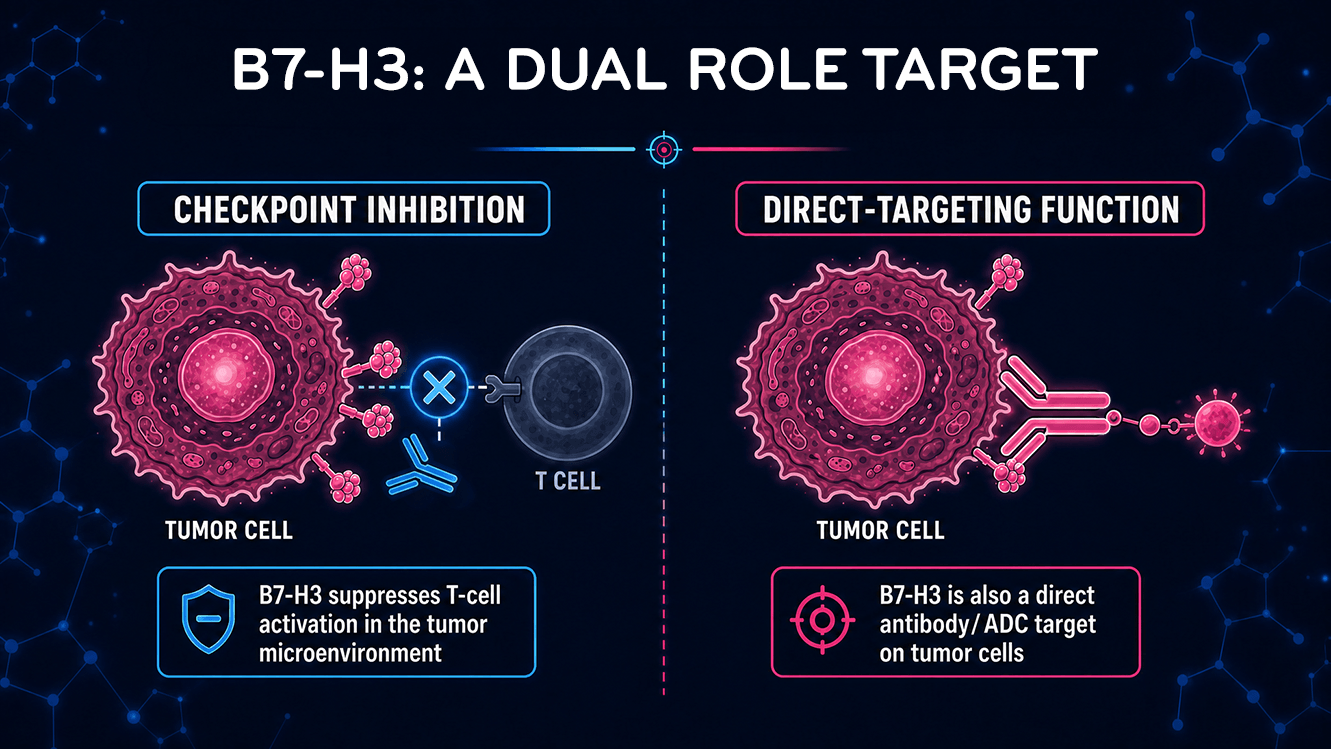
B7-H3 sits at the intersection of immune regulation and direct tumor biology. As a B7-family immune checkpoint ligand, it suppresses T-cell activation in the tumor microenvironment; independently, it is overexpressed on the tumor cells themselves across a striking breadth of solid tumors, including neuroblastoma, prostate, and non-small cell lung cancer, while showing restricted expression in normal adult tissue.
This dual role has made B7-H3 attractive for both classical checkpoint-blockade approaches and as an ADC/CAR-T antigen, positioning it as a bridge target between InnoCyto's Immune Checkpoint and antibody-conjugate research lines. Because B7-H3's receptor biology is still being fully mapped, well-characterized detection and functional-blockade antibodies remain a priority reagent category for the research community.
What unites CLDN18.2, Trop-2, and B7-H3 is not a shared pathway but a shared selectivity profile: each offers a wider therapeutic window than legacy targets by minimizing on-target, off-tumor toxicity. As ADC and bispecific pipelines mature, demand is shifting from single high-affinity antibodies toward panels of well-validated, epitope-mapped reagents that support head-to-head clone comparison, expression stratification, and conjugation compatibility testing.
For laboratories building out discovery and translational pipelines around these markers, reagent quality, particularly clone specificity, conjugation flexibility, and lot-to-lot consistency, is often the rate-limiting factor between a promising target and a validated assay. InnoCyto's antibody, biosimilar, and recombinant protein development programs are actively expanding coverage in this space to support that transition from target discovery to functional characterization.
Contact us for expert support.